

Table of Contents
- What Focus Keeper Does: Core Features and Setup
- How the Pomodoro Technique for Productivity Works in Focus Keeper
- Focus Keeper Free vs Paid: What You Actually Get
- Is Focus Keeper App Worth It for Your Workflow
- Focus Keeper Alternatives: Other Apps and Methods Worth Considering
- Making Your Decision: The Real Value Proposition
- Frequently Asked Questions
Last Updated: October 10, 2026
What Focus Keeper Does: Core Features and Setup
Focus Keeper is a timer application built around the Pomodoro technique, which breaks work into focused intervals separated by breaks. It helps you structure your workday into concentrated sessions followed by recovery periods, reducing mental fatigue from prolonged focus.
Setup is simple: download, set intervals, and start. The app notifies you when sessions and breaks end. There's no complex onboarding or external tool requirements. For professionals and students wanting a distraction-free timer, this simplicity is the core value.
The app tracks completed sessions, providing visual progress and mild accountability. Seeing "12 sessions completed today" feels different than just knowing you worked.
How the Pomodoro Technique for Productivity Works in Focus Keeper
The Pomodoro technique uses 25-minute work sessions followed by 5-minute breaks, with a longer 15-30 minute break after four sessions (Assessing the efficacy of the Pomodoro technique in enhancing anatomy lesson retention...). This structure addresses a real problem: sustained concentration becomes harder without breaks.
Focus Keeper uses customizable intervals. While defaults follow traditional Pomodoro (25/5), you can adjust both work and break lengths to match your patterns without forcing a one-size-fits-all model.
The technique works because it creates predictable recovery moments. Your brain knows a break is coming, which reduces anxiety about "working forever." That psychological shift is often more valuable than the timer itself.
The notification system removes friction from deciding when to break or resume work. The app makes that decision for you, which paradoxically gives you more freedom.
Focus Keeper Free vs Paid: What You Actually Get
Free Version Capabilities
The free tier includes customizable intervals, session tracking, and basic notifications on iOS and Android. Device synchronization requires a paid account. For users wanting a straightforward timer, the free version is complete.
The free version lacks task logging, detailed analytics, and export options. Minimal ads appear on mobile but don't interrupt timer functionality.
Paid Subscription Features
The paid tier adds cross-device synchronization, task tracking with analytics, weekly/monthly reports, ad-free experience, and custom notifications.
The Real Trade-Off
The paid version justifies its cost if you manage multiple projects, bill time to clients, or need analytics. If you only need a timer, the free version is sufficient.
Start with the free version for two weeks. If you wish you could tag tasks or see analytics, upgrade. Many users never upgrade because the free tier solves their core problem.
Platform Considerations
Focus Keeper is available on iOS, Android, and web (timer-only). Cross-device sync (paid) becomes valuable if you switch between phone and computer throughout your day.
Is Focus Keeper App Worth It for Your Workflow
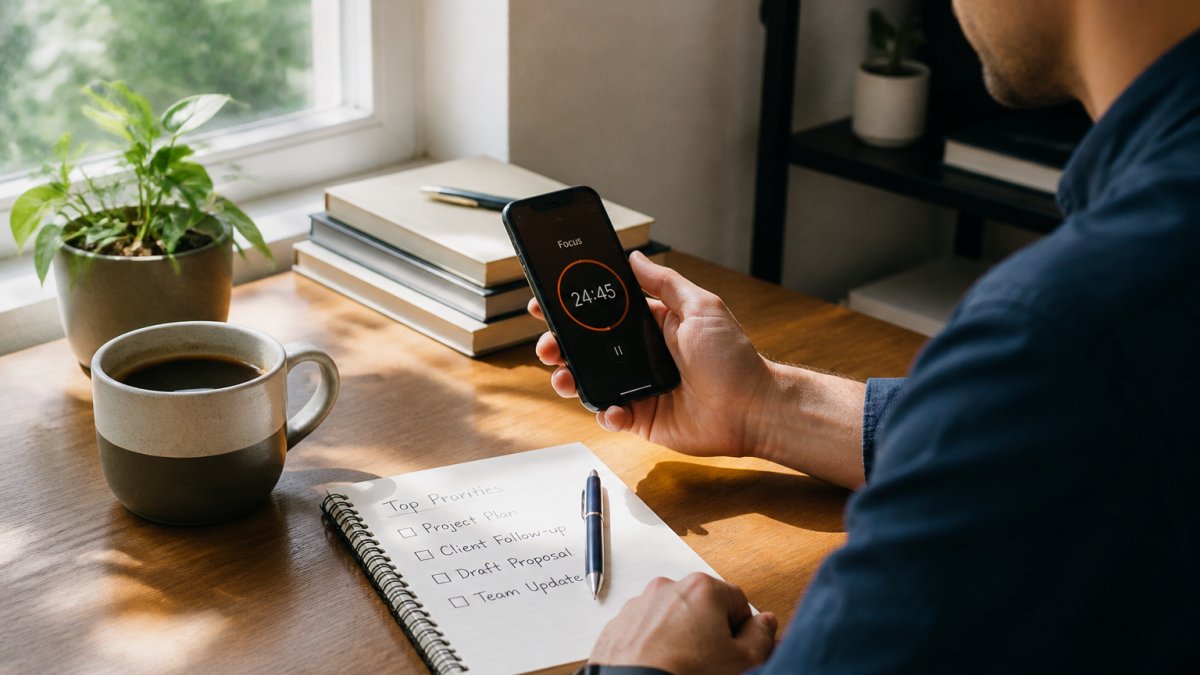
Whether Focus Keeper app worth it depends on how you manage time and whether Pomodoro matches your work patterns. It's a tool for implementing a specific system, not a productivity silver bullet.
Focus Keeper delivers value if you struggle with distraction or procrastination. The timer creates external structure when internal discipline is weak, shifting reliance from willpower to commitment.
The app works well if you want to understand task duration. Session tracking builds data about your productivity, helping you plan future work more accurately.
Focus Keeper isn't worth it if you're already structured or if Pomodoro doesn't match your style. Deep technical work, writing, or complex problem-solving sometimes needs 90-minute flow states, not 25-minute intervals.
Who Benefits Most from Focus Keeper
Students benefit from Focus Keeper. The timer enforces breaks, improving retention, and progress tracking builds confidence before tests.
Professionals managing multiple small tasks find value in the app. If your day consists of emails, messages, administrative work, and brief focused projects, the Pomodoro structure helps you batch similar work and maintain focus within each session.
Remote workers and freelancers frequently use Focus Keeper to create structure when working from home. The timer becomes a boundary between work and personal time. When the session ends, you step away. This prevents the common remote-work problem of working all day without intentional breaks.
People recovering from burnout sometimes use Focus Keeper to rebuild sustainable work habits. Instead of pushing toward exhaustion, the timer enforces regular breaks and limits daily focus sessions. This prevents the return to unsustainable patterns.
Common Mistakes That Waste Your Investment
A common mistake is treating Focus Keeper as a solution to deeper productivity problems. If you're struggling with task prioritization, the app won't fix that. If you're overwhelmed by too many competing projects, a timer won't help you choose which one matters. Focus Keeper manages time within a work session. It doesn't help you decide what work to do.
Another mistake is ignoring your actual work patterns and forcing yourself into the default 25-minute intervals. Some people need 40-minute sessions to enter deep focus. Others work better with 15-minute bursts. The app's customization exists for a reason. If you're fighting the timer instead of using it, adjust the settings to match your rhythm.
Expecting immediate productivity gains is another trap. Focus Keeper is a structure, not a motivation source. If you're not motivated to work, the timer won't create that motivation. It will just make you sit through 25-minute sessions of low-effort work. The app works best when you're already committed to the work itself.
Focus Keeper Alternatives: Other Apps and Methods Worth Considering
Focus Keeper is not the only Pomodoro timer available, and it may not be the best fit for every workflow. Understanding the alternatives and their trade-offs helps you make an informed decision.
Other Pomodoro Timer Apps
Several alternatives exist in the Pomodoro-timer space, each with different strengths:
-
Forest: Gamifies focus sessions by growing a virtual tree during each work interval. If you complete the session, the tree grows; if you leave the app, it dies. This appeals to users who respond well to visual rewards and game mechanics. Forest also plants real trees through partnerships with environmental organizations for each completed session. The trade-off: it's more expensive than Focus Keeper's paid tier and requires more engagement than a simple timer. Best for: users who need motivation and enjoy gamification.
-
Be Focused: Offers more granular customization than Focus Keeper, including the ability to set different timer lengths for different days of the week, integrate with task management tools like Todoist, and track time spent on specific projects. It has a steeper learning curve and more complex interface. Best for: professionals managing multiple projects who want deep integration with their existing tools.
-
Toggl Track: Primarily a time-tracking tool that includes Pomodoro functionality. It excels at detailed project and client billing but is overkill if you only need a timer. Best for: freelancers and agencies that bill by time.
-
Marinara Timer: A free, web-based Pomodoro timer with no app download required. It's extremely simple and works in any browser. The trade-off: no session history, no analytics, no mobile app. Best for: users who want zero friction and don't care about tracking.
Key Differences from Focus Keeper
Focus Keeper's strength is simplicity. It does one thing well: provide a clean, distraction-free timer with basic session tracking. Most alternatives add features (gamification, project integration, billing) that increase complexity. If you want a timer and nothing else, Focus Keeper remains the leanest option.
Pricing varies significantly. Most Pomodoro apps offer free tiers with limited features and paid subscriptions in the $5-$15/month range. Focus Keeper's pricing is competitive within this range, though exact costs depend on your region and whether you choose monthly or annual billing.
Non-App Time-Management Approaches
Beyond timer apps, alternative methods exist that don't require software:
-
Time-blocking: Schedule specific work blocks on your calendar without a timer. You commit to working on a task from 9:00-9:45 AM, then move to the next task. This gives you structure without the rigid interval enforcement of a Pomodoro timer. Some people find this more flexible because they can extend a session if they're in deep focus, rather than stopping at the timer's signal. Best for: people who work well with calendar-based structure and don't need external enforcement.
-
The Ivy Lee Method: Each morning, write down your six most important tasks in priority order. Work through them in sequence until complete. This addresses task prioritization directly, which no timer app does. You might combine this with Focus Keeper for maximum effectiveness: use Ivy Lee to decide what to work on, then use Focus Keeper to structure the time. Best for: people overwhelmed by too many tasks who need clarity on priorities.
-
Batch Processing: Group similar work together and complete all of it in one session. Instead of switching between emails, messages, and focused work throughout the day, you dedicate 9:00-10:00 AM to email, 10:00-11:00 AM to focused work, and 11:00 AM-12:00 PM to messages. This reduces context-switching, which often matters more than session length. Best for: people whose work involves frequent interruptions and task-switching.
-
The 90-Minute Ultradian Rhythm Method: Based on research into natural energy cycles, this approach uses 90-minute work blocks followed by 15-20 minute breaks, rather than 25-minute Pomodoros. Some people find this matches their natural focus capacity better. Best for: people who find 25-minute intervals too short and need longer uninterrupted blocks.
Choosing Between Focus Keeper and Alternatives
Use Focus Keeper if: you want a simple, distraction-free timer; you're new to the Pomodoro technique and want to test it without complexity; you work well with 25-minute intervals; you don't need advanced analytics or project integration.
The honest truth: the timer itself matters less than whether you'll actually use it. A complex app you abandon is worse than a simple app you use daily. Focus Keeper's strength is that it's simple enough to use consistently, which is often the deciding factor.
Making Your Decision: The Real Value Proposition
The honest assessment: Focus Keeper is worth it if you need structure and the Pomodoro technique matches your work style. It's not worth it if you're already structured or if the technique doesn't fit your workflow.
The app's real value isn't the timer itself. Any clock can measure 25 minutes. The value is the psychological structure. The timer removes decision-making about when to take breaks. It creates predictable work cycles. It provides visible progress tracking. These elements address real problems for many people.
The free version is genuinely functional. Before spending money on the paid tier, use the free version for two weeks. You'll quickly know whether the app is helping or whether you're fighting it. If you're fighting it after two weeks, the paid features won't change that. If it's helping, then you can evaluate whether the paid features solve additional problems.
Focus Keeper works best as part of a larger productivity system, not as a standalone solution. Pair it with clear task prioritization, realistic daily goals, and an understanding of your own work patterns. The app manages time. You manage priorities and effort.
The challenge with improving your productivity isn't finding the right timer. It's building sustainable work habits that actually stick. At Step-by-step Timesaver, our time-management guides walk you through building a complete productivity system that includes timer apps, task prioritization, and habit formation.
Frequently Asked Questions
How long should a Pomodoro focus session be?
The standard Pomodoro technique uses 25-minute work intervals followed by 5-minute breaks. After four complete cycles, take a longer 15-30 minute break to recharge. Focus Keeper allows you to customize these intervals based on your preferences and work style, so you can adjust session lengths if you find different durations work better for your concentration patterns.
Is Focus Keeper free to use?
Focus Keeper offers both free and paid versions. The free version includes core timer functionality and basic session tracking. The paid upgrade removes ads, adds advanced analytics, and provides additional customization options. Your choice depends on whether the free features meet your needs or if the premium features justify the cost for your workflow.
What are the best alternatives to Focus Keeper?
Several alternatives implement the Pomodoro technique differently. Some apps emphasize simplicity with minimal interface design, while others add task management, calendar integration, or team collaboration features. The best alternative depends on whether you prioritize distraction reduction, detailed progress tracking, cross-platform availability, or specific integrations with tools you already use.
Is Focus Keeper good for deep work?
Focus Keeper supports deep work by creating structured time blocks that minimize context switching and enforce uninterrupted focus periods. The timer creates accountability and reduces decision fatigue about when to take breaks. However, deep work success also depends on eliminating external distractions, silencing notifications, and having a clear task list before you start, Focus Keeper handles the timing structure, but you control the environment.