

Table of Contents
- Is Project Management Training Worth It: The Real Decision Framework
- How PMP Certification Salary Increase Compares Across Career Stages
- Project Management Training Duration and Time Commitment
- Best Project Management Certifications for Beginners
- Project Management Training Cost vs Benefit Analysis
- Alternative Learning Paths: Bootcamps, Self-Study, and Employer-Sponsored Training
- Red Flags: When Project Management Training Might Not Be Worth It
- How to Decide if Professional Project Management Training Is Right for You
Last Updated: August 19, 2026
Is Project Management Training Worth It: The Real Decision Framework
Is professional project management training worth it? The answer depends on your career stage, industry, and investment capacity. For some professionals, formal certification delivers measurable returns within 18 months. For others, practical experience and self-directed learning prove equally effective at lower cost.
At Step-by-step Timesaver, we've helped professionals navigate this decision by breaking down the real trade-offs between training investment and career outcomes. This guide cuts through the noise and gives you a framework to decide if professional project management training aligns with your goals.
The decision isn't binary. It's about matching your situation to the right learning path. Some roles demand credentials. Others reward demonstrated competency. Some teams sponsor training. Others expect you to fund it yourself.
How PMP Certification Salary Increase Compares Across Career Stages
Salary impact from project management credentials varies dramatically by experience level. Understanding these distinctions prevents wasting money on credentials that won't move the needle for your specific situation.
Entry-level roles
For professionals with fewer than three years of experience, project management credentials create a professional signal that opens doors. Entry-level candidates who complete training report faster advancement into coordinator and junior PM roles.
The real value for entry-level professionals is career trajectory. A certified project coordinator advances to PM roles faster than an uncertified peer. That acceleration compounds over time. Starting a senior PM role two years earlier translates to significantly higher lifetime earnings.
Cost-benefit analysis for entry-level workers should emphasize time to promotion rather than immediate salary gains. If training cuts two years off your path to a PM role, the investment pays for itself through accelerated advancement.
Mid-career professionals
Mid-career professionals with 5-10 years of experience see the strongest ROI from formal credentials. At this stage, you have enough experience to apply certification knowledge immediately and face the skill gap that employers screen for when promoting into senior PM or program management roles.
Many organizations require PMP or PRINCE2 credentials for advancement past a certain level. If your target role has this requirement, training becomes non-optional. The salary difference between a PM and a senior PM can exceed 30% depending on industry and company size.
Mid-career professionals also benefit from networking and methodology standardization that formal training provides. Understanding how other organizations structure projects and connecting with practitioners facing similar challenges often matters as much as the credential itself.

The decision for mid-career workers often hinges on employer sponsorship. If your company covers training costs, the ROI calculation becomes nearly automatic. If you're self-funding, verify that your target role actually requires the credential before committing.
Senior and leadership positions
Senior professionals and organizational leaders face a different calculus. At this level, credentials matter less than track record. A VP of PMO doesn't need a PMP to lead a function; they need proven results managing complex initiatives.
However, some senior roles do require credentials as a baseline. Certain industries, government contracting, and highly regulated sectors expect certifications even for leadership positions. For senior professionals considering training, the decision often isn't about salary but about credibility in a new industry or role type.
The opportunity cost also matters at senior levels. The 150-200 hours required for certification preparation could generate more value through client relationships, strategic projects, or professional speaking. Senior professionals should weigh training against alternative investments in their professional brand.
Project Management Training Duration and Time Commitment
Understanding the actual time investment helps you plan realistically and assess whether training fits your life right now.
Study hours and exam preparation
Entry-level certifications like CAPM require 75-100 hours of study. PMP certification demands 150-200 hours of focused preparation. Advanced credentials like PRINCE2 Practitioner or PMI-ACP run 120-180 hours depending on your background.
Most professionals underestimate the time required initially. They plan for 150 hours of study but don't account for review time, practice exams, or mental fatigue. Building a 20-30% buffer into your timeline prevents burnout.
When to expect career impact
The timeline from certification to measurable career impact varies. For entry-level professionals, expect 6-12 months. For mid-career professionals, expect 3-6 months. Senior professionals may see immediate impact if moving into a credentialed role.
Completing training doesn't automatically trigger a promotion. You need to apply what you've learned, demonstrate competency in your current role, and position yourself for the next opportunity. Training creates readiness; you still need to execute the career move.
Best Project Management Certifications for Beginners
Beginners face a crowded field of credentials. Choosing the right one depends on your target industry and career trajectory.
Entry-level credentials vs. advanced options
The CAPM (Certified Associate in Project Management) is the natural entry point. It requires less experience than PMP and focuses on foundational concepts. CAPM is ideal if you have fewer than three years of PM experience or are transitioning from a non-PM role.
PRINCE2 Foundation appeals to professionals in Europe, UK, or industries that use PRINCE2 methodology. Scrum Master certifications (CSM, PSM) are excellent if you work in tech, software development, or agile-focused organizations.
The mistake most beginners make is pursuing PMP immediately. PMP requires 3,000+ hours of project experience. Start with CAPM or a methodology-specific credential instead.
Choosing between standardized testing and practical experience
Standardized certifications like PMP and PRINCE2 carry weight with traditional organizations and government contractors. Practical bootcamps and online courses offer faster skill acquisition without the credential.
The choice depends on your target employers. Fortune 500 companies and government agencies screen for specific credentials. Startups and smaller organizations care more about demonstrated competency. Research job postings in your target industry; if 70% require a specific certification, pursue it. If credentials appear in only 10% of postings, self-study might be more efficient.
Project Management Training Cost vs Benefit Analysis
The financial decision hinges on direct costs, opportunity costs, and realistic salary expectations.
Direct financial return on investment
Training costs vary widely. Self-paced online courses run $500-$1,500. Instructor-led bootcamps cost $2,000-$5,000. Exam fees add $300-$1,000. Study materials add another $200-$800.
The salary increase from certification varies by role and industry. Entry-level professionals might see a $5,000-$10,000 increase over 18-24 months as they advance. Mid-career professionals might see $15,000-$30,000 increases tied to promotion.
Calculate your personal ROI by comparing training cost against realistic salary increase over 24 months. Research actual salary ranges for your target role in your location and industry. Then decide if the gap between your current salary and target salary justifies the investment.
Soft skills, career trajectory, and professional growth
The intangible benefits often exceed the direct financial return. Formal training teaches standardized methodologies that make you effective in new organizations. Networking through training programs creates professional connections that last decades.
Professional growth compounds. The first certification establishes credibility. The second credential builds on it. Training also improves confidence, which translates to better project outcomes and faster advancement.
Consider these soft benefits when calculating ROI. If training costs $3,000 and generates $15,000 in direct salary increase plus professional relationships worth thousands more, the decision becomes clearer.
Alternative Learning Paths: Bootcamps, Self-Study, and Employer-Sponsored Training
Not every professional needs formal certification. Alternative learning paths often deliver faster results at lower cost.
Bootcamps compress training into intensive weeks. You study full-time, complete projects, and finish with a credential or completion certificate. Bootcamps work well for career changers who need to prove competency quickly.
Self-study through online courses, books, and practice projects takes longer but costs less. You learn at your own pace and apply knowledge immediately to your job. Self-study works for disciplined learners who don't need external structure.
Employer-sponsored training is the sweet deal if available. Your company covers costs and often gives you study time. The trade-off is that you may be locked into the organization for a period after training.
University programs and graduate degrees offer comprehensive education but demand significant time and money. An MBA with a PM focus takes 18-24 months and costs $20,000-$100,000. This path makes sense if you're early in your career and can afford the investment.
The best path depends on your timeline, budget, and learning style. Match the learning method to your situation, not to what sounds most prestigious.
Red Flags: When Project Management Training Might Not Be Worth It
Before investing, recognize situations where training delivers poor ROI or shouldn't be your priority.
Don't pursue training if you're planning to leave your current company within six months. Avoid training if your target role doesn't actually require credentials. Research job postings for your target position; if fewer than 30% mention specific certifications, training may not move the needle.
Skip training if you're still building foundational PM experience. If you have fewer than 18 months in PM roles, focus on learning through doing. Don't pursue training if cost is a genuine burden. A $5,000 course funded through debt while supporting dependents is risky.
Avoid training if you're avoiding the real problem. Some professionals think a credential will solve performance issues or interpersonal challenges. Training won't fix those. Finally, don't pursue training if you're doing it for external validation rather than career progression. Demonstrated results often matter more than credentials.
How to Decide if Professional Project Management Training Is Right for You
Use this framework to make the decision systematically.
Start by defining your target role clearly. Research 10 job postings for your target role and note which credentials appear most frequently. If PMP appears in 80% of postings, it's non-negotiable. If it appears in 10%, it's optional.
Assess your current experience level honestly. Count your months in PM-related roles. If you have fewer than 24 months, entry-level credentials make sense. If you have 5+ years, advanced credentials or no additional credentials might be appropriate depending on your goals.
Calculate your realistic ROI. Research salary ranges for your current role and target role in your location and industry. Subtract training cost from the salary difference. If the ROI period is under 18 months, training is likely worth it. If it exceeds three years, reassess whether training is the bottleneck to advancement.
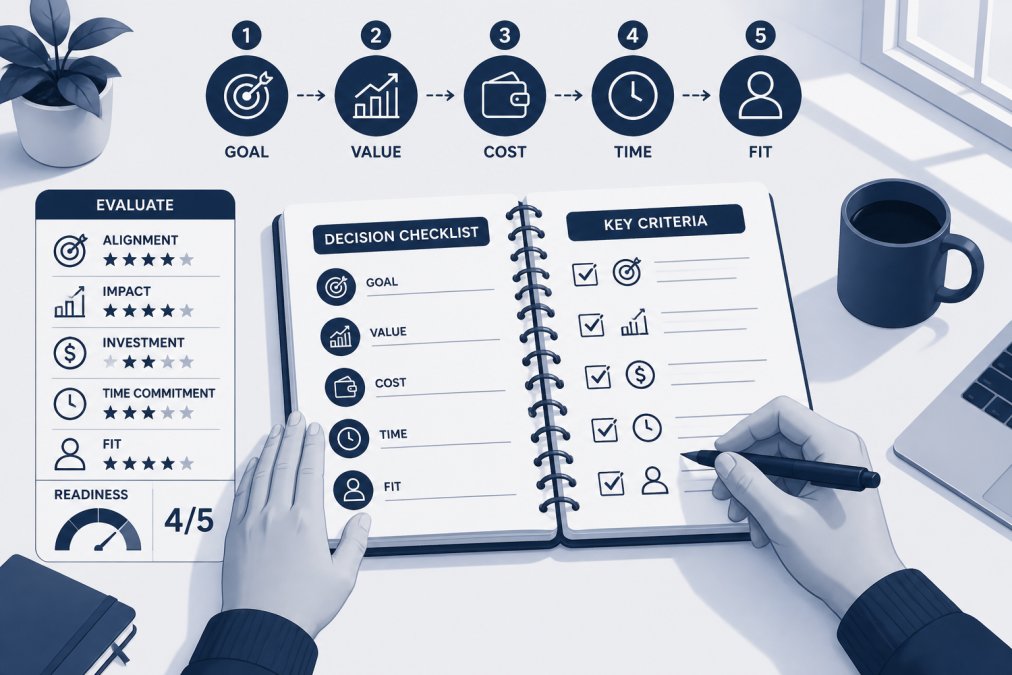
Evaluate your learning style. Do you need external structure and accountability, or do you learn better independently? Match the learning method to how you actually learn.
Check whether your employer offers sponsorship. If your company covers training costs and provides study time, the decision becomes easier. Confirm there are no strings attached.
Assess the timing in your career. Are you stable enough to complete training without major disruption? Do you have time for 100-200 hours of study in the next three months?
Finally, talk to people doing the role you want. Ask whether they pursued training and whether they'd do it again. Ask what credentials their employer actually values. These conversations often reveal that training isn't the limiting factor.
The decision to pursue professional project management training ultimately depends on your specific situation, not industry averages. Entry-level professionals building their first PM role benefit from credentials that signal competency. Mid-career professionals targeting advancement into roles with credential requirements see strong ROI. Senior professionals and those with solid track records often find alternative investments more valuable.
Step-by-step Timesaver helps professionals navigate complex decisions like this through clear, actionable frameworks. Our guides break down career decisions into structured steps, helping you evaluate options without overwhelm. Whether you're deciding between training paths or building a plan to advance your PM career, our resources provide the clarity and structure you need to move forward with confidence.
Frequently Asked Questions
Is getting a project management professional certification worth it if I already have work experience?
Yes, but the value depends on your career stage and industry. Experienced professionals often see faster ROI because they can apply certification knowledge immediately to real projects. A formal credential bridges the gap between practical experience and industry recognition, hiring managers increasingly use certifications as a professional signal when evaluating candidates for senior roles. However, if you're already earning well and advancing without one, the benefit may be smaller than for early-career professionals seeking credibility.
How long does project management training duration typically take, and when will I see results?
Most certifications require 100-200 study hours over 2-6 months, depending on your prior knowledge and learning pace. You may see immediate benefits: new skills boost project delivery confidence within weeks, and resume value appears as soon as you pass the certification exam. Salary increases and career advancement typically follow within 6-12 months as employers recognize your credential and you apply new methodologies to your work. Early career professionals often see faster advancement than those already established in their roles.
What's the difference between a project management certificate and a professional certification, and which should I choose?
A certificate is often a completion credential from a course or bootcamp with minimal prerequisites, faster and cheaper but less recognized by hiring managers. A professional certification (like PMP) requires documented work experience, standardized testing, and ongoing continuing education, making it more rigorous and valued across industries. For beginners, start with a certificate to build foundational skills and practical experience. After gaining 3-5 years of project leadership, pursue a professional certification for greater earning potential and career advancement opportunities.
Is project management training worth it if my employer will sponsor it?
Absolutely, employer-sponsored training removes the financial barrier and often includes study support, making ROI nearly guaranteed. You gain new skills and industry recognition without personal cost. This is one of the strongest reasons to pursue professional development. Negotiate for sponsorship by showing how the training improves project delivery, risk management, and team leadership on your current projects. Many employers view this as an upskilling investment that benefits both your career trajectory and their operational efficiency.
This article was written using GrandRanker