

Table of Contents
- Understanding Natural Anxiety Management at Home
- Breathing Exercises for Anxiety Relief: Immediate Techniques
- Grounding Techniques for Panic Attacks: Stay Present
- How to Reduce Stress in the Workplace: Practical Strategies
- Daily Habits to Reduce Anxiety: Long-Term Management
- Supporting Techniques: Aromatherapy, Nutrition, and Digital Detox
- Common Mistakes to Avoid When Managing Anxiety Naturally
- Frequently Asked Questions
Last Updated: September 17, 2026
Understanding Natural Anxiety Management at Home
Managing anxiety without medication is possible. Many people find that simple, natural techniques help them feel calmer and more in control. Natural anxiety management involves using breathing exercises, movement, and lifestyle changes to regulate your nervous system and reduce stress.
Research from the National Institute of Mental Health shows that many people benefit from combining multiple approaches. The techniques in this guide work best when you practice them regularly, not just when anxiety strikes.
Breathing Exercises for Anxiety Relief: Immediate Techniques
Your breath is your fastest tool for calming anxiety. When you're stressed, your breathing becomes shallow and fast. Controlled breathing signals your nervous system to relax.
The 4-7-8 Breathing Technique
The 4-7-8 technique slows your heart rate and quiets racing thoughts: breathe in for 4 counts, hold for 7, exhale for 8.
Here's how to do it:
- Sit with your back straight
- Breathe in through your nose for 4 counts
- Hold your breath for 7 counts
- Exhale slowly through your mouth for 8 counts
- Repeat 4 times
Box Breathing for Nervous System Regulation
Box breathing works slightly faster for some people, using equal counts for inhale, hold, exhale, hold.
The steps are straightforward:
- Breathe in through your nose for 4 counts
- Hold for 4 counts
- Exhale through your mouth for 4 counts
- Hold for 4 counts
- Repeat 5-10 times
Grounding Techniques for Panic Attacks: Stay Present
Grounding techniques pull you back to the present moment using your senses, interrupting the anxiety spiral.
The 5-4-3-2-1 Sensory Method
The 5-4-3-2-1 technique uses your five senses to anchor you to the present. You notice things around you instead of your anxious thoughts.
Here's the process:
- Notice 5 things you can see (colors, shapes, objects)
- Notice 4 things you can touch (texture, temperature, material)
- Notice 3 things you can hear (sounds, background noise)
- Notice 2 things you can smell (fresh air, food, scents)
- Notice 1 thing you can taste (gum, water, food)
How to Reduce Stress in the Workplace: Practical Strategies
Office and work-from-home anxiety require different approaches due to environmental and boundary constraints.
Office and On-Site Anxiety Management
In a traditional office, you need discreet techniques that work in minutes without drawing attention.
Work-From-Home Anxiety: Boundary and Environment Strategies
Work-from-home specific strategies:
Physical workspace separation: Create a dedicated work zone using a room divider, curtain, or visual marker. This mimics the commute that office workers use to decompress.
Daily Habits to Reduce Anxiety: Long-Term Management
Real change comes from daily habits that build anxiety resilience over weeks and months.
Sleep Hygiene and Anxiety Reduction
Poor sleep and anxiety feed each other; breaking this cycle requires consistent sleep habits.
Sleep hygiene means:
- Going to bed at the same time every night
- Waking up at the same time every morning
- Keeping your bedroom cool and dark
- Avoiding screens one hour before bed
- No caffeine after 2 PM
Physical Activity and Movement
Movement is one of the most effective anxiety treatments; gentle movement works as well as intense workouts.
Good options include:
- Walking for 20-30 minutes
- Yoga or stretching
- Swimming or water aerobics
- Dancing
- Gardening or yard work
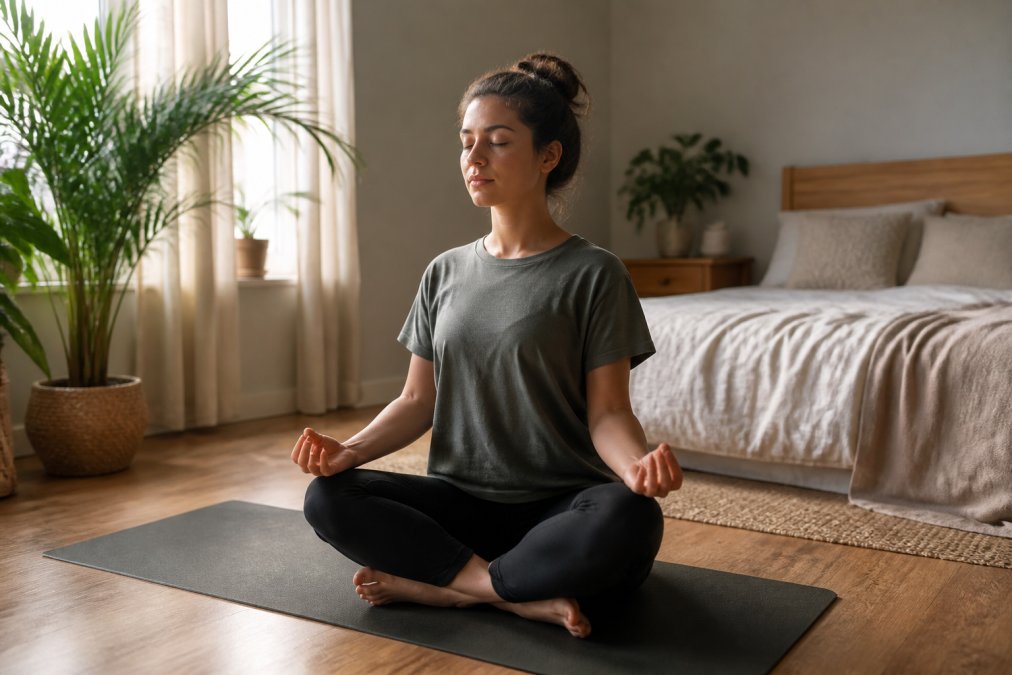
Mindfulness and Meditation Practices
Mindfulness is paying attention to the present moment without judgment; five minutes of daily meditation helps.
Start with:
- Find a quiet spot
- Sit comfortably
- Focus on your breathing
- Notice thoughts but don't follow them
- Gently return focus to your breath
Supporting Techniques: Aromatherapy, Nutrition, and Digital Detox
Three supporting areas are aromatherapy, nutrition, and digital detox, the latter being one of the fastest-growing anxiety triggers.
Aromatherapy and Essential Oils
Lavender, chamomile, and lemon balm calm your nervous system.
How to use aromatherapy:
- Diffuse essential oils in your room for 20-30 minutes before bed or during work breaks
- Add 5-10 drops to a warm bath
- Apply diluted oil (1-2 drops mixed with a carrier oil like coconut oil) to your wrists or neck
- Keep a scented sachet near your bed or on your pillow
Scent signals your brain to relax through the olfactory system, which connects to the limbic system; lavender is inexpensive and widely available.
Dietary Choices and Herbal Supplements
Caffeine, sugar, and alcohol increase anxiety; better choices include herbal teas, magnesium-rich foods, whole grains, omega-3s, and probiotics.
Digital Detox and Screen Time Management: A Modern Anxiety Driver
Constant screen time is one of the fastest-growing anxiety triggers, yet most anxiety guides ignore it. Social media comparison, news overload, blue light exposure, and notification anxiety all trigger stress responses. Your nervous system never gets a break from stimulation.
Practical digital detox strategies:
- No screens one hour before bed: This allows melatonin to rise naturally and improves sleep quality. Sleep is foundational to anxiety management. Without it, all other techniques are less effective.
- Phone-free meals: Eating without screens allows your parasympathetic nervous system (rest-and-digest mode) to activate. This improves digestion and reduces stress.
- One screen-free hour daily: This can be morning, afternoon, or evening. Use it for a walk, reading, stretching, or conversation. Your mind gets space to rest and process.
- No checking email or social media first thing in the morning: Starting your day with work stress or social comparison primes your nervous system for anxiety. Instead, spend the first 30 minutes on a calming activity (breathing, stretching, tea, journaling).
- Turn off notifications: Disable notifications for email, social media, news, and non-essential apps. Check them on your schedule, not on their schedule. This removes the constant interrupt-driven stress.
- Use grayscale mode: Convert your phone to grayscale (Settings > Accessibility > Display & Text Size > Color Filters). Without color, apps are less engaging and you scroll less.
- Set app time limits: Most phones allow you to set daily limits on specific apps. Set a 20-30 minute daily limit on social media and news apps. When the limit is reached, the app closes.
Common Mistakes to Avoid When Managing Anxiety Naturally
Common mistakes: expecting instant results, trying everything at once, stopping when you feel better, comparing your progress, and skipping basics like sleep and movement. Real change requires daily practice.
| Technique | Best For | Time Required | Frequency |
|---|---|---|---|
| 4-7-8 Breathing | Immediate calm | 2-3 minutes | Daily or as needed |
| Box Breathing | High stress moments | 2-3 minutes | As needed |
| 5-4-3-2-1 Grounding | Panic attacks | 5 minutes | During anxiety |
| Sleep routine | Long-term anxiety | 30 minutes setup | Every night |
| Daily movement | Stress resilience | 20-30 minutes | Most days |
| Meditation | Mental clarity | 5-10 minutes | Daily |
Frequently Asked Questions
How can I calm anxiety at night naturally?
Combine sleep hygiene practices with calming techniques. Two hours before bed, reduce screen time to lower cortisol levels and blue light exposure. Practice box breathing or the 4-7-8 technique for 5-10 minutes to activate your parasympathetic nervous system. Try aromatherapy with lavender oil on your pillow, and avoid caffeine after 2 p.m. Progressive muscle relaxation, tensing and releasing each muscle group from toes to head, helps release physical tension that feeds anxiety. A warm herbal tea with chamomile or lemon balm can support relaxation without medication.
What daily habits reduce anxiety most effectively?
The most consistent anxiety-reducing habits are: 30 minutes of physical activity most days (which lowers cortisol and activates the parasympathetic nervous system), 7-9 hours of quality sleep, and a daily mindfulness or meditation practice, even just 10 minutes. Limiting caffeine intake and managing screen time, especially before bed, prevents nervous system overstimulation. Adding magnesium-rich foods and herbal supplements like ashwagandha or passionflower supports nervous system regulation. These habits work best when combined rather than used in isolation, and consistency matters more than intensity.
Which natural anxiety management techniques work fastest for panic symptoms?
The 4-7-8 breathing technique and box breathing activate your parasympathetic nervous system within 2-5 minutes, making them the fastest in-the-moment tools. The 5-4-3-2-1 grounding technique interrupts the fight-or-flight response by anchoring you to your physical surroundings. These work because they directly calm your nervous system rather than requiring lifestyle changes. For best results, practice these techniques when you're calm so your body recognizes them as a safety signal, then they work faster when panic hits. Pairing breathing with grounding, breathe while naming what you sense, amplifies effectiveness.
Can I manage anxiety at home without supplements or medication?
Yes. Breathing exercises, grounding techniques, physical activity, sleep hygiene, and mindfulness-based stress reduction are all evidence-based methods that don't require supplements. However, some people find herbal options like chamomile tea, lavender aromatherapy, or magnesium helpful as supportive tools, not replacements. Digital detox, reducing screen time and work-from-home stress triggers, also reduces anxiety naturally. The key is consistency: daily habits compound over weeks, while breathing and grounding techniques provide immediate relief. If anxiety is severe or persistent, consult a mental health professional to rule out underlying conditions and explore cognitive behavioral therapy or other therapeutic options alongside natural techniques.