

Table of Contents
- Why Teams Move Beyond Static PDF Guides
- How to Choose Project Management Software That Fits Your Workflow
- Best Project Management Software for Small Teams
- Project Management Best Practices for Efficiency
- Key Features That Matter in Modern Project Management Tools
- Migration Strategies: Moving From PDF Guides to Dynamic Platforms
- Total Cost of Ownership: Beyond the Price Tag
- Conclusion
Last Updated: August 26, 2026
Why Teams Move Beyond Static PDF Guides
Static PDF guides freeze projects in time, but modern teams face real-time changes that require real-time documentation. When your project plan lives in a PDF, updates mean email chains, version confusion, and the constant risk that someone's working from an outdated document. A dynamic platform solves this instantly, everyone sees the same current state.
At Step-by-step Timesaver, we understand the frustration of managing projects with disconnected tools. That's why we've built resources to help teams transition from manual processes to intelligent workflows that save time and reduce stress.
The core issue isn't that PDFs are bad, it's that they're static. Modern projects need visibility into what's happening now, who's responsible for what, and what's coming next. That visibility requires a platform designed for real-time collaboration.
How to Choose Project Management Software That Fits Your Workflow
Choosing the right project management software is less about finding the "best" tool and more about finding the tool that matches your specific workflow. A platform perfect for a creative agency might feel bloated for a small e-commerce team.

Start by mapping your actual process. How do tasks flow through your team? When do decisions need to happen? Where do bottlenecks occur? Your project management tool should address your real friction points.
The best project management software depends on three things: task management capabilities, collaboration features, and integration ecosystem. Task management covers how you create, assign, and track work. Collaboration features determine how teams communicate and stay aligned. Integration ecosystem matters because your tool needs to connect to email, messaging, file storage, and reporting tools you already use.
Consider your team size. Small teams under five people often overcomplicate things with enterprise-grade tools. Mid-sized teams of 5-20 need balance between structure and flexibility. Larger teams need scalability, permission controls, and reporting depth that grows with them.
Best Project Management Software for Small Teams
Small teams have different needs than enterprises. You don't need complex permission hierarchies, advanced portfolio management, or multi-level approval workflows. You need clarity, speed, and minimal overhead.
For small teams, the best project management alternatives share these traits: simple onboarding, visual task management (kanban boards or gantt charts), and mobile access. The ideal tool should handle task management without requiring documentation for every decision. It should show what's due, who's responsible, and what's blocked.
Pricing matters more for small teams because you're paying per person. Look for plans that scale with your headcount and don't charge for features you'll never use. Most small teams benefit from a platform that combines task management with basic file sharing and communication channels, eliminating the need to switch between multiple tools.
AI Efficiency Masterclass: Revolutionize Your Workflow
The rise of AI-driven automation is changing how teams approach project management. Instead of manually updating statuses, reassigning tasks, and generating reports, modern platforms use AI to handle routine work automatically.
The AI Efficiency Masterclass: Revolutionize Your Workflow teaches you how to use AI as your project management co-pilot. Rather than simply choosing better software, you learn to work smarter by automating the repetitive parts of project management. The masterclass covers intelligent automation for scheduling, resource allocation, and deadline tracking, processes that usually consume hours of manual effort each week.

AI-driven tools can analyze your project patterns, predict delays before they happen, and suggest resource reallocation automatically.
Project Management Best Practices for Efficiency
Efficiency in project management comes from structure, not from software features. The foundation is breaking work into discrete, trackable units. Tasks should be small enough to complete in a day or two, not sprawling initiatives that drag on for weeks.
Real-time reporting matters more than you might think. When stakeholders can see project status without asking for updates, you eliminate status meetings. When team members can see dependencies without email threads, work flows faster.
Communication channels should be intentional. Use project management platforms for task-related discussion, messaging tools for quick questions, and email for formal decisions. When communication channels blur, important information gets lost.
Milestone tracking keeps long projects from feeling endless. Break multi-month work into 2-4 week milestones with clear deliverables. This creates momentum and makes it easier to spot projects drifting off track.
The single biggest efficiency killer is unclear ownership. Every task needs a single person responsible. When multiple people share responsibility, accountability disappears and work stalls.
Key Features That Matter in Modern Project Management Tools
Not all project management software features are equally valuable. Essential features include task creation and assignment, deadline tracking, and status visibility. These three features alone solve most problems that send teams back to email and spreadsheets.
Kanban boards and gantt charts serve different purposes. Kanban boards show workflow stages and bottlenecks. Gantt charts show timelines and dependencies. The best project management software includes both and lets you choose which view matches your thinking.
File sharing and version control matter because projects generate documents. Having documents live inside your project management platform keeps everything in one place. User permissions and access controls become important as teams grow, allowing you to restrict visibility without creating information silos.
Mobile access matters more than people expect. Project work happens outside the office, in meetings, at client sites, while traveling. A tool that only works on desktop becomes useless the moment your team leaves their desks.
Migration Strategies: Moving From PDF Guides to Dynamic Platforms
The jump from static PDF guides to dynamic project management software intimidates many teams. The key to successful migration is treating it as a process, not an event.
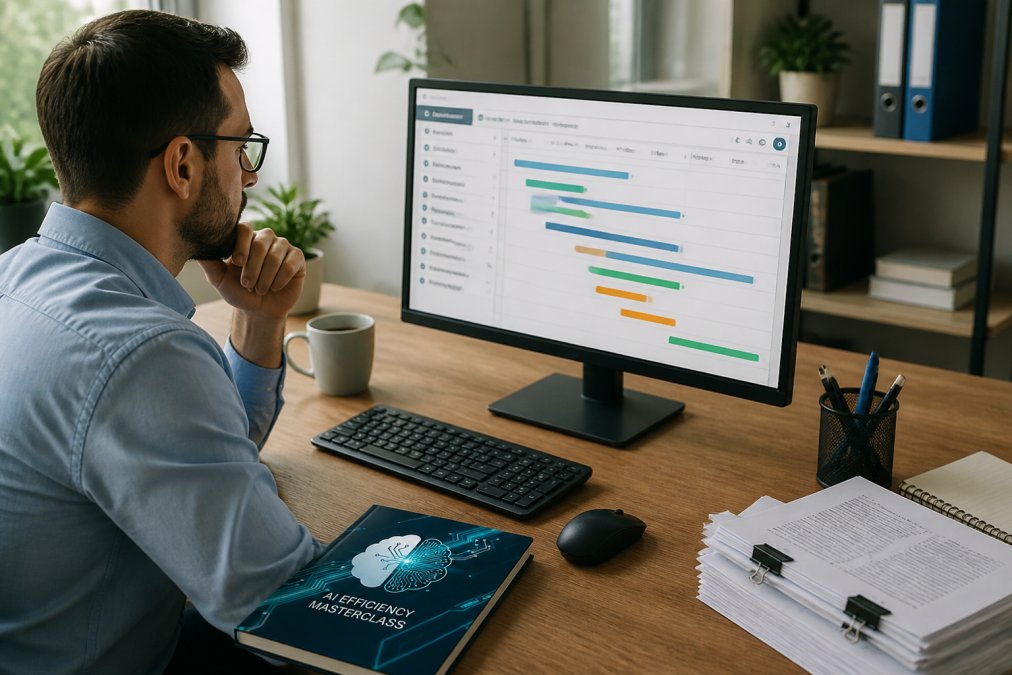
Start with one active project, migrate it fully, and use that success as proof of concept before moving other projects. Document your current workflow as it actually exists. What tasks do you track? How do you communicate status? Where do decisions happen?
Data migration from PDFs is usually manual because PDFs don't contain structured data. Rather than trying to parse old documents, create a clean starting point in your new tool. Copy over essential information, project name, deadline, key milestones, but don't try to migrate every historical detail.
Training happens best through doing, not through documentation. Have your team use the new tool on a real project while someone who understands both systems is available to answer questions. The transition period usually takes 2-4 weeks before your team stops reaching for the old PDFs (peer-reviewed research).
The biggest migration mistake is running parallel systems too long. Using both PDFs and the new platform creates confusion about which document is current. Set a hard cutoff date and commit to it.
Total Cost of Ownership: Beyond the Price Tag
The monthly subscription cost is only one part of the total cost. Implementation time, training, integration work, and the cost of sticking with an inefficient system all factor into the real expense.
Many teams underestimate the cost of not changing. Using email for project coordination costs time in status meetings, lost context as email threads sprawl, and mistakes when information is scattered. A team of five people spending two hours per week managing project coordination through email loses roughly 500 hours per year to process overhead (peer-reviewed research). At an average loaded cost of $50 per hour, that's $25,000 in annual waste that a $200/month tool could eliminate (bls.gov).
Implementation cost varies by tool complexity. Simple tools can be running in days. Training cost depends on your team's willingness to learn, a two-hour group walkthrough usually suffices for straightforward tools. Integration cost matters if your tool needs to connect to other systems.
Compare tools not just on monthly cost, but on total cost of ownership: subscription + implementation + training + integration + opportunity cost of staying with your current system.
| Cost Category | Typical Range | Notes |
|---|---|---|
| Monthly subscription (small team) | $50-300 | Per-user pricing varies significantly |
| Implementation (one-time) | 0-2000 | Depends on tool complexity |
| Training (one-time) | 0-1000 | Most tools have good self-service options |
| Integration setup (one-time) | 0-3000 | Critical if connecting to other systems |
| Annual cost of inefficiency (if you don't change) | 10000-50000 | Time wasted on manual coordination |
The shift from static PDF guides to dynamic project management software isn't optional anymore. Teams that make this move gain competitive advantage through better visibility, faster decision-making, and dramatically less time spent on coordination overhead.
Step-by-step Timesaver's AI Efficiency Masterclass: Revolutionize Your Workflow teaches you how to implement these principles effectively. The masterclass covers efficient project management using AI to automate routine work, showing you exactly how to transition from manual processes to intelligent workflows that save time and reduce stress.
Frequently Asked Questions
What are the main advantages of project management software over static PDF guides?
Project management software provides real-time collaboration, automatic updates, task tracking, and team visibility, capabilities static PDFs cannot offer. While PDF guides work for one-time reference, active projects need dynamic tools that reflect current status, assign responsibilities, track deadlines, and enable communication. Software platforms also integrate with other tools your team uses, eliminating manual data entry and reducing errors. For teams managing ongoing workflows, this difference directly impacts productivity and accountability.
How do I choose project management software for my specific team size and industry?
Start by mapping your actual workflow: What tasks recur? Who needs access? How do you track progress now? For small teams, prioritize ease of use and affordability, complex platforms create friction. For larger teams, focus on scalability, permission controls, and reporting. Consider your industry: creative teams often prefer kanban boards; construction teams need Gantt charts and budget tracking. Test free trials before committing. The best tool matches how your team actually works, not how software vendors say you should work.
What features should I prioritize in project management software?
Core features include task management, deadline tracking, team collaboration, and reporting. Beyond basics, look for integration with tools you already use (email, calendar, Slack), customizable workflows, mobile access, and permission controls. Real-time notifications keep teams aligned without constant check-ins. File sharing and comment threads reduce email clutter. For distributed teams, time zone support and asynchronous workflows matter. Avoid over-feature-rich platforms that overwhelm users, simpler tools with strong fundamentals outperform bloated alternatives.
How long does it take to migrate from PDF guides to a project management platform?
Migration timeline depends on complexity. Simple transitions (small team, few projects) take 1-2 weeks. Larger migrations involving data import, permission setup, and team training typically require 4-8 weeks. Start by defining your project structure in the new tool, then move active tasks and historical data. Run both systems in parallel for 1-2 weeks to catch gaps. Train your team on core workflows before full cutover. The AI Efficiency Masterclass ($379) includes project management modules that accelerate this process by teaching structured planning upfront.
What is the total cost of ownership for project management software versus PDF guides?
PDF guides have low direct costs but hidden expenses: time spent manually tracking progress, errors from outdated information, and productivity loss from poor collaboration. Project management software costs monthly subscriptions (typically $5-30 per user) but recovers this through faster task completion, fewer missed deadlines, and reduced administrative overhead. A team of five spending 5 hours weekly on manual coordination saves roughly $5,000 annually in labor, often exceeding software costs. Evaluate TCO by calculating your team's hourly rate against time saved, not just subscription fees.
This article was written using GrandRanker